
A website can publish excellent content, optimise its pages carefully and fix every obvious technical SEO problem while still struggling to compete for difficult search terms. The missing element is often authority.
Other websites ranking for the same keywords may have accumulated references from industry publications, newspapers, blogs, associations, directories, suppliers, journalists and other trusted websites.
Those references create backlinks. But acquiring them requires more than sending hundreds of generic outreach emails.
The most effective link building strategies begin by understanding why another website would reasonably want to reference a business, page, study, product, expert or resource.
Some backlinks are created through guest content. Others come from existing articles, digital PR, original research, statistics, interviews, useful tools, partnerships or simple competitor research.
The objective is not to use every link-building tactic available. It is to identify the strategies that fit the website, market, resources and pages that actually need additional authority.
What Are Link Building Strategies?
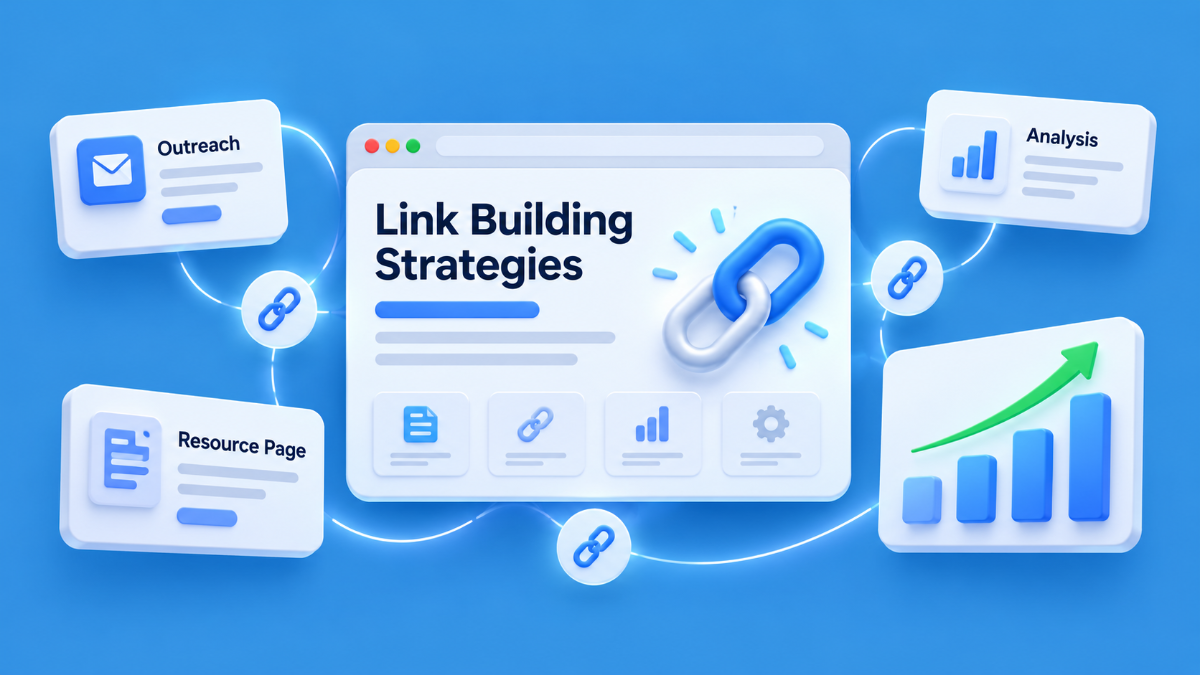
Link building strategies are structured methods used to attract or acquire backlinks from other websites. A strategy explains more than where the backlink should come from.
It should answer:
- What type of website should provide the link?
- Why would that publisher want to link?
- Which page should receive the backlink?
- What asset, relationship or contribution creates the opportunity?
- How will prospects be identified?
- How will the opportunity be approached?
- How will acquired links be monitored?
This distinction matters.
“Get more backlinks” is an objective.
Analyse three organic competitors, identify relevant publications linking to at least two of them, investigate why those links exist and approach suitable publishers with a stronger resource” is a strategy.
Professional link building becomes considerably more effective once campaigns move from the first mindset to the second.
Best Link Building Strategies at a Glance
| Link Building Strategy | Best Used For | Main Requirement |
| Competitor backlink analysis | Finding proven opportunities | Backlink research |
| Guest posting | Editorial authority | Quality content |
| Niche edits | Contextual existing-page links | Relevant indexed articles |
| Digital PR | Media coverage | Newsworthy angle |
| Original research | Natural editorial links | Unique data |
| Statistics content | Journalist and publisher citations | Useful statistics |
| Free tools and resources | Passive link attraction | Strong asset |
| Broken link building | Resource replacement | Prospect research |
| Resource-page outreach | Educational/resource links | Useful destination page |
| Unlinked mentions | Reclaiming existing brand visibility | Brand monitoring |
| Expert commentary | Editorial citations | Genuine expertise |
| Podcasts and interviews | Brand and expert links | Strong spokesperson |
| Partnerships | Commercially relevant links | Real relationships |
| Relevant directories | Local and industry visibility | Legitimate listings |
| Lost-link reclamation | Recovering previous authority | Backlink monitoring |
| Content upgrading | Competing for existing links | Superior content |
| Visual asset outreach | Image attribution links | Original graphics/data |
| Testimonials and case studies | Supplier/customer links | Genuine relationship |
| Associations and organisations | Industry authority | Membership or participation |
| Events and sponsorships | Local and industry exposure | Genuine involvement |
1. Analyse Competitor Backlinks

Competitor research is one of the strongest starting points because it replaces random prospecting with evidence.
Instead of asking:
“Which websites might link to us?”
Ask:
“Which websites already link to companies competing with us?”
Start by identifying genuine organic-search competitors rather than simply choosing the business’s largest commercial rivals.
Search the important keyword clusters and record the websites that repeatedly appear.
Then compare their referring domains.
The most interesting prospects are often websites linking independently to several competitors.
If an industry publication links to four companies operating in the same market but not the fifth, there is already evidence that the publication covers the sector.
The next step is not immediately sending an email.
Open the actual pages.
Find out why each competitor received the backlink.
Perhaps it came from:
- Original research
- Expert commentary
- A comparison article
- Guest content
- A statistics page
- A directory
- A partnership
- A product review
- An interview
This is where competitor analysis becomes strategy rather than copying.
The backlink reveals the opportunity.
The referring page reveals how the opportunity was created.
Businesses performing this research regularly can use dedicated link building tools to compare competitors, discover referring domains and organise larger prospecting campaigns.
2. Use Strategic Guest Posting
Guest posting remains one of the most flexible link-building strategies because it allows the business to contribute useful editorial content to another publication.
But guest posting should not mean producing hundreds of generic articles simply because websites accept submissions.
The host publication matters.
The article matters.
The relationship between the host site, article subject and destination page matters.
Imagine a cybersecurity company wants additional authority for a page covering ransomware protection.
A detailed article about ransomware preparedness published by a genuine technology or business-security publication creates a logical context for the backlink.
A generic lifestyle article containing the same link does not.
The strongest campaigns therefore prioritise:
- Topical relevance
- Genuine readership
- Organic visibility
- Editorial standards
- Relevant destination pages
- Natural anchors
- Useful content
Companies that do not want to manage prospecting, writing and publisher negotiation internally can use professionally managed guest posting services instead.
3. Build Links Through Niche Edits
A niche edit, sometimes called a link insertion, places a backlink within an article that is already published.
This creates a different opportunity from guest posting.
Instead of creating a new article around the destination page, the link builder finds an existing article where the resource would genuinely improve the content.
Suppose an established business blog published an article about choosing accounting software two years ago.
A software company later publishes a detailed comparison tool that would genuinely help readers of that article.
There may be a contextual link opportunity.
The strength of this strategy is relevance.
The page already exists.
Its topic is already established.
It may already be indexed, internally linked and receiving organic visibility.
However, the context must make sense. Adding links to unrelated articles simply because the domain has an attractive authority metric defeats the purpose.
Businesses considering this approach can examine how professionally selected niche edits and link insertions are structured before building their own prospecting process.
4. Create Digital PR Campaigns
Digital PR approaches link acquisition through stories rather than traditional SEO outreach.
The first question becomes:
“What would a journalist actually want to cover?”
Useful angles can include:
- New research
- Consumer trends
- Market changes
- Company data
- Surveys
- Regional comparisons
- Expert reactions
- Industry forecasts
- New product developments
- Unusual datasets
The backlink is not the story.
It is the result of the story being useful enough to reference.
Consider an estate agency with access to several years of rental data.
Publishing another article called “10 Tips for Renters” may attract little attention.
Analysing how rents have changed across 50 UK towns could give journalists an original dataset they can use.
That creates a much stronger reason to cite the company.
5. Publish Original Research
Original research is particularly powerful because other publishers cannot simply find the same information everywhere else.
A business may analyse:
- Customer behaviour
- Industry transactions
- Pricing changes
- Search trends
- Survey responses
- Product usage
- Regional differences
- Market growth
- Business sentiment
- Recruitment patterns
The resulting research can then become a source.
This changes the outreach proposition.
Instead of asking a publication to “please link to our article”, the business can show the publisher information that contributes something new to the subject.
The most linkable research usually answers a question journalists, bloggers or industry professionals are already discussing.
6. Build Statistics Pages
Statistics pages can become long-term backlink assets.
Publishers frequently need supporting figures.
Journalists need numbers.
Bloggers need evidence.
Researchers need sources.
If a website creates a well-structured statistics resource around a commercially relevant topic, that page can naturally become the destination publishers reference.
For example, a recruitment company might publish:
UK Remote Working Statistics 2026
A cybersecurity company could create:
UK Cybercrime Statistics 2026
An ecommerce platform might publish:
UK Online Shopping Statistics 2026
The critical requirement is usefulness.
A page that simply copies statistics already available elsewhere offers little reason to become the preferred source.
Add original data, clearer categorisation, historical comparisons or regular updates.
7. Create Free Tools, Templates and Calculators
Not every linkable asset needs to be an article.
Sometimes the strongest asset is something people can actually use.
Examples include:
- Calculators
- Templates
- Checklists
- Interactive tools
- Generators
- Comparison tables
- Downloadable spreadsheets
- Planning frameworks
- Maps
- Databases
Suppose a mortgage website creates a useful affordability calculator. Personal finance publishers discussing affordability may have a legitimate reason to reference it.
The same principle can work across many industries.
Accountants can create tax tools.
Marketing companies can create planning templates.
Property businesses can create calculators.
Recruiters can create salary resources.
The best linkable asset solves a recurring problem.
8. Use Broken Link Building
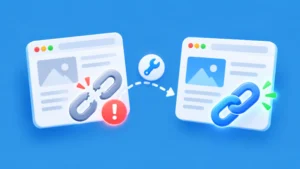
Broken link building identifies pages linking to resources that no longer exist.
The business then offers an appropriate replacement.
Imagine an industry resource page contains a link to a report that now returns a 404 error.
If the business has a current resource covering the same subject, it can contact the publisher and point out the broken reference.
This works because the outreach begins with a genuine problem on the publisher’s website.
However, relevance remains essential.
Do not create a vaguely related article simply to replace a dead link.
The replacement should satisfy approximately the same reader need as the original destination.
9. Find Relevant Resource Pages
Many universities, organisations, associations, charities, businesses and specialist publications maintain pages containing useful external resources.
These can create excellent link opportunities when the destination page genuinely belongs on the list.
Search for resource pages closely related to the business’s subject.
Then inspect what is already included.
The question should be:
“What are these editors trying to help readers find?”
If the website owns a resource that clearly adds something missing, outreach becomes considerably easier to justify.
Resource-page link building works particularly well with:
- Guides
- Free tools
- Research
- Educational resources
- Databases
- Calculators
- Templates
10. Reclaim Unlinked Brand Mentions
Sometimes the difficult part has already happened.
A publisher has mentioned the company.
It simply has not included a link.
Search for brand mentions across news articles, blogs, event coverage, interviews and industry websites.
Then determine whether adding a backlink would genuinely help readers find the company or resource being discussed.
This tactic can work particularly well for established brands that already receive media coverage.
It can also uncover mentions of:
- Founders
- Products
- Research studies
- Reports
- Tools
- Campaigns
Outreach can then politely ask whether the publisher would consider turning the relevant reference into a link.
11. Provide Expert Commentary
Journalists and publishers continually need knowledgeable people who can explain developments.
An accountant may comment on tax changes.
A cybersecurity specialist may explain a major data breach.
A recruiter may discuss employment trends.
A property professional may comment on housing-market data.
The opportunity is created by expertise.
This strategy works particularly well when businesses have named specialists who can respond quickly and provide concise, useful answers.
Generic promotional comments rarely help.
Journalists need information.
Provide information first.
Brand exposure and backlinks can follow.
12. Appear on Podcasts and Interviews
Interviews can generate more than brand awareness.
Podcast websites, YouTube channels, industry publications and interview platforms frequently create dedicated pages for guests.
Those pages may contain biographies, episode summaries and links to useful resources.
The strongest opportunities usually involve people with something meaningful to discuss.
That could be:
- Founder experience
- Specialist expertise
- Original research
- Business growth
- Industry trends
- Technical knowledge
- An unusual case study
Avoid treating interviews as backlink transactions. The backlink is secondary to providing something interesting to the host’s audience.
13. Develop Genuine Business Partnerships
Some of the most natural backlinks exist because two organisations genuinely work together.
Examples include relationships with:
- Suppliers
- Technology partners
- Distributors
- Professional organisations
- Local organisations
- Charities
- Training providers
- Industry associations
A software company may appear on a technology partner page. A supplier may feature customer case studies.
A professional association may maintain a member directory. These backlinks are difficult for competitors to copy because they originate from real-world relationships. That can make them particularly valuable.
14. Use Relevant Directories
Directory link building has a poor reputation because it has often been abused.
But that does not mean every directory is worthless.
There is a considerable difference between an automatically generated directory containing millions of unrelated websites and a respected professional directory used by people within a specific industry.
Useful examples might include:
- Professional bodies
- Trade directories
- Chamber of commerce websites
- Local business directories
- Industry marketplaces
- Supplier directories
- Membership organisations
Evaluate whether the directory would still be useful if search engines did not exist. If real customers or professionals genuinely use it, the listing may deserve consideration.
15. Reclaim Lost Backlinks
Link building should not focus exclusively on acquisition.
Links disappear.
A publisher may redesign its website.
An article may be deleted.
A URL may change.
An editor may update a page and remove an old reference.
Your own website may also create the problem by deleting or moving the destination page.
Regularly reviewing backlink monitoring tools makes it easier to identify lost links before they are forgotten.
Once a valuable backlink disappears, investigate why. Sometimes the solution is as simple as correcting a broken URL.
In other cases, the publisher may require an updated resource.
Recovering an existing relevant relationship can be considerably easier than starting completely from zero.
16. Upgrade Content Competitors Already Earn Links To

Competitor backlink analysis may reveal that another website’s article has accumulated dozens or hundreds of referring domains.
Do not immediately contact all of them.
First determine why the page attracted links.
Perhaps it contains:
- Better research
- A useful template
- More current data
- A unique calculator
- Better visualisation
- A comprehensive reference
- Original statistics
Then ask whether your website can create something materially more useful.
Not longer for the sake of being longer.
Better.
Once the improved asset exists, publishers linking to older or less complete resources become potential prospects.
17. Create Original Visual Assets
Charts, diagrams, maps and data visualisations can generate backlinks when publishers reuse them.
This works particularly well when the visual communicates information that is otherwise difficult to explain.
For example:
- A property company could map average rents across London boroughs.
- A finance site could visualise changes in household expenditure.
- An ecommerce company could chart seasonal shopping behaviour.
- A cybersecurity company could display attack trends over time.
- Make the visual genuinely useful and clearly associate it with the original research page.
When another publisher uses the asset without linking, there may also be an attribution outreach opportunity.
18. Give Genuine Testimonials and Case Studies
Businesses regularly feature customer testimonials and success stories.
If your company genuinely uses another business’s software, professional service or product, consider whether there is an opportunity to contribute an authentic case study.
This can benefit both organisations.
The supplier receives evidence demonstrating how its product is used.
The customer receives additional exposure and potentially a relevant company reference.
The key word is genuine.
Do not manufacture testimonials purely to create backlinks.
19. Join Relevant Industry Associations
Professional bodies, trade associations and business organisations can create another category of difficult-to-replicate backlinks.
Membership may provide:
- Company profiles
- Member directories
- Event pages
- Speaker profiles
- Research participation
- Working groups
- Partner pages
Again, the value goes beyond SEO.
A legitimate industry organisation can provide networking, credibility, referrals and commercial opportunities alongside any backlink.
That makes the resulting link much easier to justify.
20. Use Events and Sponsorships Strategically
Events can create backlinks through:
- Speaker pages
- Sponsor pages
- Conference websites
- Event listings
- Partner pages
- Recap articles
- Local news coverage
The event should have genuine relevance to the business. Sponsoring dozens of unrelated websites simply because each provides a backlink is not the objective.
A cybersecurity business sponsoring an information-security conference creates a clear relationship. A local company sponsoring a respected community event may also have a logical connection. Real involvement creates the link opportunity.
Which Link Building Strategy Should a Business Start With?
There is no universal starting point. The right strategy depends on what the website already has.
A new business with almost no links may start by analysing competitors, securing basic industry citations and developing publisher relationships.
A mature company with unique internal data may be better positioned for digital PR and research-led campaigns.
A website with excellent existing content but weak authority may benefit from guest posting and contextual placements.
An established brand receiving regular press coverage may discover quick opportunities through unlinked mentions and lost-link reclamation.
A simple framework is:
| Situation | Strategies to Investigate First |
| New website | Competitor research, directories, partnerships, guest posts |
| Strong blog but weak authority | Guest posts, niche edits, content outreach |
| Unique company data | Research, statistics, digital PR |
| Strong personal expertise | Commentary, interviews, podcasts |
| Local company | Local directories, partnerships, local PR |
| Established brand | Unlinked mentions, lost links, PR |
| SEO agency | Scalable outreach, guest posts, niche edits, fulfilment |
Agencies that need to deliver campaigns across multiple clients may also decide that outsourcing white label link building services is more efficient than maintaining a separate outreach and publisher-management team internally.
Combine Several Link Building Strategies
Strong backlink profiles rarely come from one source.
A company relying exclusively on guest posts may miss digital PR opportunities.
A business concentrating exclusively on PR may struggle to build consistent authority to specific commercial pages.
A more balanced campaign might combine:
- Guest posts for controlled contextual relevance
- Niche edits for suitable existing content
- Digital PR for media authority
- Original research for naturally earned citations
- Partnerships for business-relevant links
- Link reclamation to protect existing authority
The mixture should follow the business.
Do not diversify link-building tactics simply to make a spreadsheet look balanced.
Each strategy needs a reason.
Relevance Should Come Before Authority Metrics
Domain Rating, Domain Authority and similar third-party metrics can help compare websites.
They should not make the final decision.
Imagine two opportunities.
The first comes from a general website with a very high authority metric but almost no relationship to the business.
The second comes from a smaller specialist publication read by people working directly within the company’s industry.
The second opportunity may make considerably more contextual sense.
Evaluate:
- Domain relevance: Does the overall website cover a connected subject?
- Page relevance: Does the exact linking page relate to the destination?
- Editorial fit: Would a reasonable editor include the backlink?
- Audience fit: Could readers genuinely benefit from the destination?
Metrics can support those decisions.
They should not replace them.
Match Every Backlink to the Correct Target Page
Another common mistake is directing every backlink towards the homepage.
Sometimes the homepage is appropriate.
Often it is not.
If the referring article discusses specific research, link to the research.
If it discusses a calculator, link to the calculator.
If it covers a commercial service, an appropriate service page may make more sense.
If it lists local businesses, a location page may be relevant.
The source page and target page should form a logical relationship.
This also makes outreach easier because the publisher can immediately see why the destination is useful.
Common Link Building Strategy Mistakes
1. Chasing Link Volume
One hundred poor backlinks are not automatically more useful than ten carefully selected relevant links.
Measure quality and relevance rather than treating backlink totals like a scoreboard.
2. Selecting Websites Only by DR or DA
Authority metrics are useful filters.
They are not substitutes for editorial review.
3. Copying Every Competitor Link
Competitors have weak backlinks too.
A gap does not automatically need filling.
4. Sending Generic Outreach
An editor receiving a message that could have been sent unchanged to 5,000 websites has little reason to respond.
Understand the publication before contacting it.
5. Building Links Without a Suitable Destination
Sometimes outreach fails because the website does not possess anything worth referencing.
Create the asset first.
6. Over-Optimising Anchor Text
Natural backlink profiles contain branded anchors, URLs, descriptive phrases and varied contextual references.
Do not force the same commercial keyword into every placement.
7. Forgetting Existing Backlinks
Acquiring links while valuable existing placements disappear unnoticed wastes resources.
Monitor the links already earned.
How Should Link Building Results Be Measured?
Counting newly acquired backlinks is only the beginning.
A campaign should also examine:
- New referring domains
- Quality and relevance of referring domains
- Target-page rankings
- Search impressions
- Organic clicks
- Keyword visibility
- Referral traffic
- Lost backlinks
- Link retention
- Pages receiving links
- Conversion performance
Not every backlink creates an immediate measurable ranking increase.
SEO performance is influenced by content, technical health, competition, search intent and many other factors.
Link acquisition should therefore be evaluated over a meaningful period rather than judging every individual backlink in isolation.
Build a Link-Building System, Not a Collection of Tactics
The strongest link-building programmes eventually become repeatable systems.
A basic workflow might look like this:
- Identify priority pages and keyword clusters.
- Analyse organic competitors.
- Find relevant backlink opportunities.
- Categorise each opportunity by strategy.
- Remove weak or irrelevant prospects.
- Select the appropriate destination page.
- Develop the value proposition.
- Contact the correct publisher or journalist.
- Record outreach and responses.
- Monitor successful placements.
- Review ranking and traffic changes.
- Repeat the research as competitors acquire new links.
This is considerably more useful than deciding every Monday to “do some link building”.
The process becomes measurable.
It becomes repeatable.
Most importantly, it can improve over time.
Final Thoughts
There is no single link building strategy capable of solving every backlink problem.
Competitor backlink analysis is excellent for discovering proven opportunities.
Guest posts can build controlled editorial relevance.
Niche edits can place useful references into established content.
Digital PR and original research can generate wider editorial coverage.
Tools, statistics and resources can attract links naturally.
Partnerships, associations, interviews and expert commentary can create links that competitors cannot simply reproduce through outreach.
The strongest link building strategies therefore share one characteristic.
They create a credible reason for the link to exist.
A business should not begin by asking how many backlinks it can acquire.
It should determine which pages need authority, identify the websites capable of providing relevant references, understand what those publishers value and create an appropriate reason for them to link.
For businesses that prefer to outsource that process, Backlinks4U’s link building services cover approaches including editorial guest posts, niche edits and managed link acquisition.
The objective remains the same whether link building is managed internally or externally:
Build links that make sense for the website, the publisher and the person reading the page.
Frequently Asked Questions
What are link building strategies?
Link building strategies are structured methods for acquiring or earning backlinks from relevant external websites. Examples include guest posting, competitor backlink research, niche edits, digital PR, original research, broken link building and link reclamation.
What is the best link building strategy?
There is no single best strategy for every website. The most suitable approach depends on the industry, existing backlink profile, available content, target pages, competition and resources.
Does guest posting still work for link building?
Guest posting can provide useful editorial backlinks when the host publication, article topic and destination page are genuinely relevant. Quality and contextual fit are more important than publishing large numbers of generic guest articles.
What is the difference between guest posting and niche edits?
Guest posting creates a new article containing the backlink. A niche edit adds a relevant backlink to an article that already exists.
How can competitors help with link building?
Competitor backlink analysis can reveal websites already referencing companies within the same market. Investigating why those backlinks exist can uncover publications, content formats and outreach strategies worth exploring.
What type of content attracts backlinks?
Original research, statistics, free tools, calculators, templates, detailed resources, unique data and useful visualisations often provide stronger reasons for other publishers to reference a website.
Should every backlink point to the homepage?
No. The destination should match the context of the referring page. Research should normally link to research, tools to tools and relevant commercial discussions to suitable service or product pages.
Are high-DR backlinks always better?
No. Authority metrics are third-party indicators. Topical relevance, page context, editorial quality, organic visibility and genuine audience value should also be considered.
How many backlinks does a website need?
There is no universal number. Requirements vary significantly according to the keyword, market, existing authority and strength of competing websites. Competitor referring-domain analysis provides a more useful benchmark than arbitrary backlink targets.
How often should link building be carried out?
Competitive backlink profiles continually change, so link building is usually an ongoing SEO activity. Active campaigns should regularly review competitors, new opportunities, lost links and the performance of pages receiving backlinks.
Should backlinks be monitored after they are built?
Yes. Links can disappear, change attributes, move to new URLs or point towards destination pages that later break. Monitoring helps protect backlink value and identifies opportunities to recover important lost placements.
Can several link building strategies be used together?
Yes. Many campaigns combine guest posts, niche edits, competitor research, digital PR, linkable assets, partnerships and link reclamation. The combination should reflect the website’s objectives rather than using tactics simply for variety.
