
A website may publish excellent content and still struggle to attract backlinks.
The problem is often not the content itself.
The people capable of linking to it may simply never discover it.
An industry editor may already be updating an article where the resource would fit naturally. A journalist may be preparing a feature on the same subject.
A blogger may maintain a resource page containing several competing businesses. Another publisher may have linked to three competing studies without ever encountering the newer research available on the website trying to build links.
Outreach link building attempts to close that discovery gap.
Instead of publishing content and hoping somebody eventually finds it, the business identifies relevant websites, investigates where a genuine linking opportunity exists and approaches the appropriate person with a specific reason to consider the resource.
That final part is important.
Successful outreach is not simply:
“Here is my article. Please link to it.”
A professional campaign needs prospect research, qualification, page-level relevance, appropriate contact selection, a credible value proposition, careful email delivery, follow-up management and post-placement monitoring.
The objective is therefore not to send the greatest number of outreach emails.
The objective is to identify the websites where a backlink genuinely makes sense and give the publisher a sufficiently strong reason to consider it.
What Is Outreach Link Building?
Outreach link building is the process of proactively contacting website owners, editors, journalists, content managers or other relevant decision-makers to create opportunities for backlinks.
Those opportunities may involve:
Guest contributions, editorial references, resource-page additions, expert commentary, statistics, original research, broken-link replacements, product mentions, listicle inclusion, existing-content updates, partnerships or other legitimate editorial opportunities.
The exact tactic varies.
The underlying process remains broadly similar.
A link builder normally has to determine:
| Stage | Main Question |
| Targeting | Which websites could realistically link? |
| Qualification | Is the website worth approaching? |
| Context | Why would its audience need the link? |
| Contact | Who can actually approve the change? |
| Pitch | What value is being offered? |
| Follow-up | Is another contact appropriate? |
| Placement | Does the final link make editorial sense? |
| Monitoring | Does the backlink remain live and useful? |
Outreach therefore sits between backlink research and actual link acquisition.
The backlink database may reveal an opportunity.
Outreach turns that opportunity into a conversation.
Outreach Link Building vs Other Link-Building Methods
Outreach is frequently discussed as though it were one specific tactic.
It is better understood as an acquisition process that can support several tactics.
| Method | What Usually Happens | Is Outreach Involved? |
| Guest posting | A publisher accepts an original contribution | Usually |
| Resource-page links | A useful resource is suggested for an existing page | Usually |
| Broken link building | A dead resource is identified and a replacement suggested | Usually |
| Digital PR | Journalists or publishers cover a story, dataset or expert | Often |
| Niche edits | A relevant existing article gains a contextual reference | Often |
| Unlinked mention reclamation | An existing brand mention is converted into a link | Usually |
| Directory citation | A business applies for inclusion | Sometimes |
| Natural editorial links | A publisher discovers and cites content independently | Not necessarily |
This distinction matters because the outreach message should reflect the acquisition method.
An editor maintaining an industry resource page should not receive the same pitch as a journalist looking for expert commentary.
A writer updating an old statistics article should not receive the same proposal as a website accepting guest contributions.
Good outreach starts with context.
Why Is Outreach Link Building Valuable?
Publishing strong content does not guarantee distribution.
A website may contain original research, detailed tutorials, specialist expertise and useful tools while still receiving few external links because the right publishers do not know those resources exist.
Outreach creates deliberate discovery.
It can also make backlink prospecting considerably more efficient.
Consider two potential websites.
The first is a general website discovered because it has an attractive Domain Rating.
The second has already linked to three direct competitors, regularly publishes content about the same industry and has an article where the target resource could naturally add value.
The second prospect contains considerably stronger evidence of relevance.
That does not guarantee a backlink.
It does, however, provide a rational reason to begin a conversation.
Outreach link building therefore works best when it begins with evidence rather than random email lists.
What Makes Outreach Different From Spam?
The distinction is primarily relevance and purpose.
Spam outreach normally begins with volume.
Professional outreach begins with fit.
A poor campaign may scrape thousands of websites, find whatever email address is available and send almost identical messages to everyone.
A more selective campaign begins with questions such as:
- Does this website actually cover the subject?
- Does the specific page relate to the target resource?
- Why would the editor consider changing the article?
- Would the proposed link improve the reader’s experience?
- Is the person being contacted responsible for the content?
- Does the sender have something genuinely useful to offer?
That produces a much smaller prospect database.
It also produces a better one.
Outreach Does Not Automatically Make a Backlink Safe
One important distinction is sometimes missing from outreach guides.
A link does not become compliant with Google’s policies simply because somebody manually emailed an editor.
Google defines link spam as creating links primarily to manipulate search rankings.
Its examples include buying or selling ranking links, excessive link exchanges, automated link creation and certain paid articles or guest posts where links pass ranking credit.
Paid advertising and sponsorship links can instead be appropriately qualified with attributes such as nofollow or sponsored.
The acquisition method therefore matters, but so does the reason the link exists.
A useful editorial citation added because it genuinely helps readers is fundamentally different from manufacturing placements solely to manipulate ranking signals.
Professional outreach should therefore ask a simple question before every campaign:
Would this reference make sense to the publisher’s readers even if SEO metrics were removed from the discussion?
That question eliminates many poor opportunities surprisingly quickly.
How Does Outreach Link Building Work Step by Step?
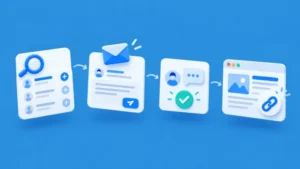
A successful campaign normally begins long before the first email is written.
Step 1: Define the Page That Needs Links
Starting with “we need more backlinks” is too broad.
Choose the actual page or group of pages being promoted.
That may be:
A commercial service page.
A category page.
An original research report.
A statistics article.
A free calculator.
A software comparison.
A detailed tutorial.
A local landing page.
The appropriate outreach strategy changes depending on the destination.
A journalist is more likely to reference original research than a generic services page.
A software comparison publisher may naturally link to a product page.
A local organisation may be willing to reference a useful regional resource.
The target URL should therefore be decided before prospecting begins.
Step 2: Determine Why Somebody Would Link
This may be the most important stage in the campaign.
Before looking for email addresses, identify the value being offered.
Possible linking reasons include:
| Linking Reason | Example |
| Original evidence | New survey, dataset or research |
| Better information | More complete or recently updated resource |
| Expert insight | Qualified specialist commentary |
| Utility | Calculator, template, checklist or tool |
| Correction | More accurate replacement information |
| Broken resource | Working alternative to a dead link |
| Comparison value | Relevant business or product missing from a list |
| Editorial contribution | Original article tailored to the publication |
| Fresh statistics | Newer evidence replacing old data |
| Brand relevance | Business genuinely belongs in the discussion |
If the answer is merely “because we want a backlink”, the campaign is not ready.
Step 3: Identify Relevant Prospects
Prospecting can begin from several data sources.
Competitor backlink analysis is often particularly effective because competing businesses have already revealed where the market’s links are coming from.
Search results can reveal additional publishers.
Industry directories can expose relevant organisations.
Existing articles may reveal resource-page opportunities.
Journalist platforms may reveal editorial requests.
Link prospecting software can substantially accelerate this research. Businesses building a larger workflow can compare the current best link building tools for competitor research, contact discovery, outreach management and monitoring.
Software should accelerate research.
It should not make the final decision.
Step 4: Qualify the Website Before Finding the Email
This order prevents wasted effort.
There is little value spending ten minutes identifying the perfect editor at a website that should never have entered the campaign.
Qualification should normally inspect several signals together.
| Signal | What To Investigate |
| Topical relevance | Does the website genuinely cover the industry? |
| Page relevance | Does the actual page relate to the target resource? |
| Organic visibility | Does the domain appear to receive genuine search visibility? |
| Editorial activity | Is useful content still being published? |
| Outbound links | Do external links appear natural and selective? |
| Audience fit | Would its readers care about the resource? |
| Indexation | Are important pages appearing in search? |
| Link context | Would the backlink belong naturally inside the content? |
| Commercial pattern | Does the website appear created primarily to sell links? |
Third-party authority metrics can support this evaluation.
They should not replace it.
A highly relevant specialist publication with moderate authority may represent a stronger opportunity than an unrelated website with a considerably larger metric.
Create an Outreach Qualification Score
Larger campaigns benefit from consistent scoring.
A simple framework can allocate points across relevance, editorial quality and acquisition potential.
| Factor | Maximum |
| Domain topical relevance | 3 |
| Exact-page relevance | 3 |
| Organic visibility | 2 |
| Editorial quality | 2 |
| Competitor overlap | 2 |
| Realistic acquisition path | 2 |
| Audience/business value | 2 |
| Total | 16 |
The number itself is not magical.
Its purpose is consistency.
Without a qualification framework, teams can gradually start approving websites because one metric looks attractive.
A scoring system forces the campaign to consider several factors together.
Step 5: Analyse the Exact Page
Outreach frequently fails because link builders qualify domains rather than pages.
Suppose an industry publication appears perfect.
That still does not explain why its editor should add the link.
Open the exact article.
Read it.
Determine what role the proposed resource could play.
Perhaps a statistic is outdated.
Maybe one section references three tools but excludes another credible option.
Perhaps an external source now returns a 404 error.
Maybe the article states something that the target research can substantiate.
The strongest pitches normally emerge from something specific found on the page.
Step 6: Find the Right Contact
Finding an email address is not the same as finding the right person.
A generic info@ address may work for a small website.
It is less useful when approaching a publication with hundreds of employees.
Depending on the opportunity, the correct contact may be:
The article author.
Section editor.
Managing editor.
Content manager.
SEO manager.
Partnership manager.
PR journalist.
Website owner.
Founder.
Marketing manager.
The closer the contact is to the actual decision, the fewer internal steps the request must travel through.
Step 7: Segment the Prospects
One of the largest improvements an outreach team can make is moving away from one giant list.
Group opportunities according to why the website might link.
For example:
| Segment | Main Outreach Angle |
| Statistics articles | New or stronger data |
| Resource pages | Useful missing resource |
| Competitor mentions | Relevant alternative or addition |
| Broken links | Working replacement |
| Guest publications | Original contribution |
| Product comparisons | Missing relevant product |
| Journalist articles | Expertise or evidence |
| Existing topical pages | Contextual supporting resource |
| Unlinked mentions | Make existing attribution easier to follow |
Segmentation makes personalisation considerably easier.
It also creates better campaign reporting because the team can determine which acquisition angles actually work.
Step 8: Decide Whether Outreach Should Happen at All
Not every opportunity deserves an email.
That is a useful filter rarely discussed enough.
Do not contact a publisher merely because software discovered an email address.
The opportunity may be too weak.
The destination page may not provide enough value.
The publication may be irrelevant.
The article may already answer the subject completely.
The contact may clearly state that unsolicited pitches are not accepted.
Sometimes the correct outreach decision is do nothing.
Strong campaigns deliberately reject prospects.
How Should an Outreach Email Be Structured?
A good outreach message normally needs four things.
- Context: Show why this specific person is receiving the message.
- Relevance: Explain the connection between their content and the proposed resource.
- Value:Give them a reason to care.
- Action:Make the next step obvious.
The email does not need to contain a long explanation of the sender’s company, history, awards and SEO goals.
The recipient mainly wants to know:
- Why are you contacting me?
- Why does this matter?
- What exactly are you suggesting?
- How much work will this create?
Personalisation Should Be About Relevance
Personalisation is frequently misunderstood.
Adding someone’s first name is not meaningful personalisation.
Neither is opening with:
“I loved your recent article.”
Real personalisation comes from understanding the content.
A much stronger message refers to the actual page, section, statistic, resource or editorial gap creating the outreach opportunity.
The difference is substantial.
Weak personalisation says:
“I saw your website and thought my article would be a great fit.”
Useful personalisation says, in effect:
“Your guide currently references 2023 market figures in this section. We have published the 2026 dataset covering the same market, including UK regional figures that are not currently referenced.”
The second message explains why contact is occurring.
Do You Need Outreach Email Templates?
Templates are useful operationally.
They become dangerous when the entire email becomes a template.
A good campaign separates fixed information from variable information.
The basic structure may remain consistent.
The reason for contact should change.
The relevant page should change.
The value proposition should change.
The recommended resource should change.
The recipient should change.
Templates should therefore reduce repetitive administration without removing context.
How Many Follow-Ups Should Be Sent?
There is no universal number.
A short follow-up can be appropriate because editors and website owners have crowded inboxes.
Repeatedly contacting somebody who has shown no interest is different.
For many campaigns, one or two concise follow-ups provide enough opportunity for the original message to be noticed without turning the campaign into persistent inbox pressure.
The follow-up should also add context where possible.
Simply writing:
“Following up again.”
provides the recipient with no additional reason to respond.
A better follow-up might clarify the proposed resource, provide the exact relevant section or make the suggested action easier.
Email Deliverability Is Part of Link Building
A strong pitch cannot generate a response if the email never reaches the inbox.
Outreach operations therefore need to think about sender reputation.
At minimum, businesses should use appropriate domain authentication, keep mailing lists clean, avoid sudden unreasonable sending-volume changes and remove addresses that repeatedly fail.
Google’s current Gmail sender requirements require SPF or DKIM authentication for senders delivering mail to personal Gmail accounts.
Senders delivering more than 5,000 messages per day to Gmail accounts face additional requirements including SPF, DKIM and DMARC authentication plus unsubscribe requirements for relevant marketing messages.
Most genuine manual link-building campaigns should never need anything close to that volume.
The broader lesson remains important.
Scaling badly configured outreach simply scales deliverability problems.
What Should UK Businesses Know About Outreach Compliance?
UK outreach teams should also understand that email prospecting can involve privacy and direct-marketing rules.
The ICO distinguishes between corporate subscribers and certain individual subscribers such as sole traders.
Its current B2B guidance explains that PECR’s electronic-mail marketing rule does not apply in the same way to corporate subscribers, although senders must not conceal their identity and must provide a valid method for opting out.
Personal data used to contact individual employees can still create UK GDPR considerations.
Campaigns involving sole traders, individual subscribers or large scraped contact databases deserve additional care.
Outreach should therefore be managed as a professional communications process, not simply an SEO spreadsheet.
How Can AI Be Used for Outreach Link Building?
AI can significantly reduce administration.
It can also produce terrible outreach extremely quickly.
The best use of AI is generally research assistance rather than unsupervised sending.
AI can help:
Analyse large prospect datasets.
Classify websites by topic.
Summarise relevant articles.
Identify possible linking angles.
Suggest prospect segments.
Clean CRM notes.
Draft first versions of messages.
Identify duplicate prospects.
Organise campaign data.
It should not be trusted blindly to decide whether a site is suitable or send thousands of automatically personalised messages without review.
As more companies use generative tools, generic AI outreach becomes easier for publishers to recognise.
Human judgement therefore becomes more important rather than less.
What Types of Outreach Link Building Work?
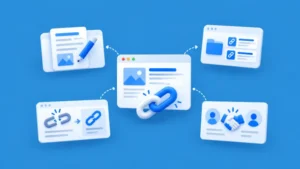
Different websites require different acquisition strategies.
Guest Post Outreach
Guest posting works when a publisher accepts useful original contributions and the proposed topic genuinely fits its audience.
The strongest pitch is normally the article idea rather than the backlink request.
Businesses considering this route can review how professional guest posting services approach publisher selection, content creation and contextual placement.
Guest contributions should not become an excuse to manufacture keyword-rich links at scale.
Editorial fit still matters.
Broken Link Outreach
Broken link building starts with a problem already present on the publisher’s page.
A resource has disappeared.
The link returns an error.
The information may no longer exist.
The outreach therefore offers something useful immediately:
Identification of the broken resource and a suitable replacement.
The replacement needs to match the original context closely.
Finding a dead link about cybersecurity does not justify pitching a generic cybersecurity services page.
Resource Page Outreach
Some websites intentionally maintain useful resource collections.
These pages can produce strong outreach opportunities when the website being promoted genuinely belongs in the list.
The pitch should explain what the resource contributes that existing entries do not already provide.
Statistics Outreach
Statistics pages are highly linkable because writers repeatedly need evidence.
A strong campaign may identify articles referencing old statistics and approach publishers after producing newer or more detailed data.
This works particularly well when the resource contains original information rather than simply republishing statistics collected from other websites.
Expert Commentary Outreach
Founders, executives and technical specialists can become sources for journalists and industry writers.
This strategy is closer to digital PR than traditional backlink requests.
The backlink is a possible outcome of providing credible expertise.
The expertise should remain the primary value.
Unlinked Brand Mention Outreach
Sometimes the hardest part has already happened.
A publisher has mentioned the business.
It simply did not link.
These opportunities can be considerably warmer than completely cold outreach because the publisher already knows the organisation exists.
The request should remain reasonable.
Not every brand mention requires a hyperlink.
Listicle Outreach
Commercial searches increasingly contain comparison articles such as:
“Best accounting software.”
“Top cybersecurity platforms.”
“Best marketing agencies.”
“Best CRM tools.”
If a legitimate product or company is missing, there may be an outreach opportunity.
However, the company should genuinely fit the editorial criteria.
Paying to appear inside every “best” article regardless of relevance creates a very different kind of campaign.
Niche Edit Outreach
Niche edits involve adding a relevant backlink to existing published content.
They can make sense where a published article already discusses the exact topic and a new reference genuinely improves the content.
Businesses exploring this approach can see how niche edits and contextual link insertions are structured.
The page itself deserves careful review.
An old indexed article is not automatically a good placement merely because it already exists.
Outreach Link Building vs Digital PR
The two disciplines increasingly overlap.
Traditional outreach may begin with:
“We found a relevant page where this resource could help.”
Digital PR may begin with:
“We have new information that could become a story.”
The difference is mainly the asset and editorial angle.
| Outreach Link Building | Digital PR |
| Often targets existing pages | Often creates new coverage |
| Frequently SEO-led | Frequently story-led |
| Resource or page is already available | Campaign may create the news hook |
| Targets website owners and editors | Often targets journalists |
| Can generate individual placements | Strong campaigns may generate broad coverage |
A sophisticated backlink campaign can use both.
How Should Outreach Prospects Be Prioritised?
Not all approved prospects deserve equal effort.
A useful campaign can divide them into priority levels.
High-priority prospects combine strong relevance, credible editorial quality and a clear acquisition path.
Medium-priority opportunities may be relevant but have a weaker linking reason.
Low-priority prospects may remain useful for later testing but should not consume disproportionate research time.
This is particularly important when the prospecting database contains hundreds or thousands of domains.
The team should spend its best research time on the websites most capable of producing meaningful results.
Measure the Entire Outreach Funnel
Counting sent emails tells almost nothing about campaign performance.
A better funnel measures what happens at each stage.
| Metric | What It Reveals |
| Prospects discovered | Size of initial opportunity pool |
| Prospects approved | Quality of research |
| Contacts identified | Operational coverage |
| Emails delivered | Deliverability quality |
| Replies | Message and targeting performance |
| Positive replies | Actual publisher interest |
| Negotiations | Opportunities requiring further work |
| Links secured | Conversion into placements |
| Links remaining live | Placement durability |
| Qualified referring domains | Actual backlink-profile growth |
This structure makes troubleshooting considerably easier.
Suppose reply rates are low.
The problem may be prospect relevance, contact quality, email copy or deliverability.
Suppose replies are strong but few links are obtained.
The issue may be the offer itself.
Suppose many links go live but disappear three months later.
The problem may be placement quality.
“Send more emails” is therefore not always the correct answer.
Calculate Cost Per Acquired Link
Campaign economics matter.
Consider all genuine costs.
Research time.
SEO software.
Contact-finding tools.
Email systems.
Content creation.
Outreach staff.
Editorial assets.
Follow-up time.
Negotiation.
Reporting.
Monitoring.
If a campaign costs £3,000 and generates ten acceptable placements, the basic acquisition cost is approximately £300 per link.
That figure can then be compared by strategy.
Guest outreach may cost more but produce stronger placements.
Broken-link outreach may require more research but less content.
Digital PR may produce few results in one campaign and dozens in another.
Cost should therefore be analysed alongside quality rather than independently.
A £50 backlink is not automatically better value than a £300 backlink.
Track Cost Per Qualified Link, Not Every Link
This distinction matters.
Suppose an outreach campaign secures 25 links.
Ten come from irrelevant websites.
Five come from weak pages that later disappear.
Ten meet the campaign’s quality criteria.
Dividing campaign cost by 25 creates an artificially attractive cost-per-link figure.
Dividing it by the ten links the business would genuinely want to acquire again produces a much more useful measurement.
Quality control should therefore continue after placement.
Monitor Links After Outreach
A successful reply is not the end of the campaign.
Neither is publication.
Backlinks can disappear.
Articles can be deleted.
URLs can change.
Link attributes can change.
Destination pages can return errors.
Domains can lose relevance or editorial quality.
Important acquired backlinks should therefore enter a monitoring system.
Teams operating ongoing campaigns can compare specialist backlink monitoring tools to track new links, lost links, referring domains, anchors and other changes.
Link retention is part of campaign performance.
What Should Be Recorded in an Outreach Spreadsheet?
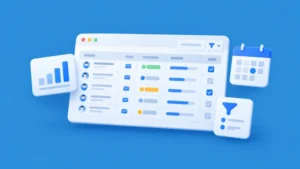
A serious campaign needs more than columns for “website” and “email”.
Useful fields include:
| Field | Purpose |
| Domain | Prospect website |
| Source URL | Exact relevant page |
| Target URL | Page being promoted |
| Opportunity type | Guest post, resource, broken link etc. |
| Relevance | Topical fit |
| Authority metric | Supporting comparison data |
| Organic visibility | Evidence of real search presence |
| Contact | Decision-maker |
| Email status | Verified or unverified |
| Linking reason | Why the publisher may care |
| Priority | Campaign order |
| Outreach date | First contact |
| Follow-up date | Next action |
| Response | Positive, negative or none |
| Negotiation notes | Relevant context |
| Live URL | Successful placement |
| Anchor | Final reference |
| Link attribute | Follow, nofollow, sponsored etc. |
| Monitoring status | Active, changed or lost |
That database eventually becomes valuable institutional knowledge.
Handle Outreach Objections Properly
Not every reply will say yes.
Common responses include:
“We do not update old content.”
“We only accept contributed articles.”
“We charge for placements.”
“We are not interested.”
“Send more information.”
“We only work with established contributors.”
The correct response depends on the situation.
Do not try to force every conversation into the original link-building tactic.
If the publisher does not edit existing articles but accepts genuinely useful guest contributions, the opportunity may change.
If the publisher explicitly declines, close the conversation.
Professional outreach protects relationships.
When Should a Prospect Be Removed?
A prospect should normally leave the campaign when the website fails quality checks, the opportunity no longer exists, the contact opts out, the publisher clearly rejects the proposal or the required placement would no longer make editorial sense.
Continuing to contact somebody indefinitely does not increase campaign quality.
Good outreach systems know when to stop.
How Can Agencies Scale Outreach?
Agencies face a different problem from individual website owners.
They may be managing dozens of clients, thousands of prospects and numerous publisher conversations simultaneously.
Scale therefore requires process.
Research standards need to be documented.
Prospect qualification needs consistency.
Contacts must not receive duplicate emails from different team members.
Publisher history needs to be visible.
Anchors and destination URLs need approval.
Placements need quality checks.
Reports need reliable data.
Agencies that do not want to build the full fulfilment infrastructure internally can also use white-label link building services to support recurring campaigns while retaining control of their client relationships.
Should Outreach Be Automated?
Parts of the workflow can be.
The entire judgement process should not be.
Automation is useful for repetitive administration such as:
Email verification.
CRM updates.
Follow-up reminders.
Duplicate detection.
Status changes.
Basic prospect classification.
Reporting.
Link monitoring.
The more sensitive tasks still benefit strongly from human review.
Prospect approval.
Understanding editorial context.
Choosing the value proposition.
Negotiating with publishers.
Approving final placements.
Assessing unusual websites.
Protecting relationships.
The best outreach automation reduces repetitive work without automating strategic judgement away.
Example of an Outreach Link-Building Campaign
Imagine a UK cybersecurity company publishes an original report analysing security incidents affecting small businesses.
The company wants backlinks to the report.
The team begins by identifying articles already discussing small-business cybersecurity statistics.
It finds 600 pages.
After removing irrelevant websites, inactive domains and weak content, 210 remain.
Page-level analysis reduces the list to 120 genuinely relevant opportunities.
Those prospects are segmented.
Forty articles reference statistics older than three years.
Twenty-five link to competing research.
Fifteen contain broken data sources.
Twenty are specialist cybersecurity resources.
Ten are journalist-written features.
The remainder have other relevant editorial contexts.
The outreach campaign is now very different from sending 600 identical emails.
Each group has a reason for contact.
Older-statistics pages receive updated evidence.
Broken-resource pages receive a suitable replacement.
Journalists receive the strongest findings and expert availability.
Resource pages receive a clear explanation of why the report belongs.
Competitor-linked pages receive a differentiated research angle.
The campaign has moved from email distribution to opportunity matching.
That is the central principle behind professional outreach.
Why Do Outreach Campaigns Fail?
Campaigns usually fail earlier than the email-writing stage.
The wrong prospects are selected.
The content provides no compelling reason to link.
The team contacts generic addresses rather than decision-makers.
The same pitch is used for every opportunity.
The campaign prioritises Domain Rating over relevance.
Emails become too long.
Follow-ups become excessive.
Deliverability is ignored.
The landing page is too commercial for the proposed context.
The campaign measures responses but not acquired links.
Placements go live but are never monitored.
AI-generated personalisation is sent without human checks.
Links are pursued even when they do not make editorial sense.
The email itself may be perfectly written.
That cannot repair poor strategy.
Outreach Link Building Should Work With Content Strategy
Sometimes a lack of backlinks is not an outreach problem.
It is an asset problem.
Imagine five competing businesses have earned hundreds of links to:
Original industry research.
Free calculators.
Annual market reports.
Useful templates.
Statistics libraries.
Interactive tools.
The website performing outreach has only standard commercial landing pages.
Cold emailing more editors may not solve the gap.
The website may first need something publishers actually want to reference.
Link building and content strategy therefore need to operate together.
Outreach distributes assets.
It cannot permanently compensate for weak assets.
Outreach Link Building Should Work With Backlink Gap Analysis
Competitor backlink gaps can substantially improve prospect discovery.
If three competitors receive links from the same publication, that website deserves investigation.
The important next step is determining why those links exist.
Perhaps all three competitors appear in a comparison article.
Perhaps they supplied proprietary data.
Maybe their founders contributed commentary.
Perhaps they belong to the same association.
Outreach should follow the reason behind the link.
Competitor research tells the team where opportunities might exist.
Page-level analysis explains why they exist.
Outreach decides how to approach them.
Outreach Link Building Checklist
Before launching a campaign, confirm that:
- The target page has been selected.
- There is a genuine reason for another website to reference it.
- Prospects have been checked for topical relevance.
- Exact referring pages have been manually reviewed.
- Organic visibility and editorial quality have been considered.
- The correct contact has been identified where possible.
- Prospects have been segmented by opportunity type.
- Outreach messages are based on page-level context.
- Sender authentication and deliverability have been checked.
- UK privacy and marketing requirements have been considered where applicable.
- Follow-ups are controlled rather than excessive.
- Replies and negotiations are stored centrally.
- Live links receive final quality review.
- Important placements are monitored after publication.
- Campaign performance is measured through acquired qualified links rather than sent-email volume.
If several of these elements are missing, writing a better outreach template is unlikely to fix the campaign.
Is Outreach Link Building Worth Doing?
Yes, when there is a strong relationship between the target page, the prospect website and the reason for contact.
Outreach remains valuable because it converts passive link-building hopes into deliberate publisher research.
It can help a business discover websites already covering its market, understand what those publishers value and create opportunities for editorial mentions that may never happen through passive content publishing alone.
However, outreach is not a shortcut.
The strongest campaigns normally require considerably more research than email writing.
Prospects have to be found.
Websites need qualification.
Pages need manual inspection.
Contacts need research.
Linking reasons need development.
Assets sometimes need improvement.
Publisher relationships need management.
Placements need monitoring.
That work is exactly what separates strategic outreach from mass backlink solicitation.
How many emails can we send?
They ask:
Which publishers have a genuine reason to care about this resource, and what would make the proposed link useful to their audience?
That change in perspective affects the entire campaign.
Prospect databases become smaller but more relevant.
Personalisation becomes easier.
Messages become clearer.
Publisher relationships improve.
Campaign measurement becomes more meaningful.
And the backlink becomes the outcome of a sensible editorial relationship rather than the sole purpose of the conversation.
Final Thoughts
Outreach link building is often described as the process of emailing people and asking for backlinks.
That description misses most of the work.
Professional outreach begins by identifying a page worth promoting.
It then determines why another publication could legitimately reference that page.
Relevant websites are discovered, qualified and manually investigated.
The appropriate person is identified.
Prospects are segmented according to their actual linking context.
Only then does the email become important.
The strongest outreach campaigns therefore do not ask:
Frequently Asked Questions
What is outreach link building?
Outreach link building is the process of identifying relevant websites and contacting the appropriate people to create opportunities for backlinks, editorial mentions, guest contributions or other link-earning placements.
Does outreach link building still work in 2026?
Yes. Outreach remains widely used for guest posting, digital PR, resource links, statistics outreach, broken link building, listicle inclusion and contextual editorial opportunities. Results depend heavily on relevance, prospect quality and the strength of the offer.
How do you find websites for link-building outreach?
Prospects can be discovered through competitor backlink research, backlink-gap analysis, search results, industry publications, resource pages, journalist platforms and specialist prospecting tools.
How many outreach emails should be sent?
There is no ideal number. A smaller campaign contacting highly relevant prospects can be more productive than sending thousands of poorly targeted messages. Campaigns should be planned around qualified opportunities rather than arbitrary volume.
How many times should you follow up?
One or two concise follow-ups can be reasonable for many campaigns. Repeated contact after clear disinterest should be avoided.
Should outreach emails be personalised?
Yes, but useful personalisation should focus on the recipient’s content and the actual reason for contact rather than superficial details such as merely inserting a first name.
What is the best outreach link-building strategy?
There is no single best tactic. The appropriate strategy depends on the destination page, industry and publisher. Guest contributions, research outreach, broken links, resource pages, expert commentary and existing-content opportunities can all work in the correct context.
Can AI automate link-building outreach?
AI can help with prospect classification, research, message drafting and administration. Human review remains important for website qualification, editorial context, negotiation and final placement approval.
Is manual outreach better than automated outreach?
Manual research generally provides stronger context and quality control. Automation is most useful for repetitive operational work rather than replacing the strategic decisions behind prospect selection and pitching.
Does a high Domain Rating mean a website is a good outreach prospect?
No. DR, DA and similar metrics are third-party indicators. Topical relevance, organic visibility, page quality, editorial standards and the actual linking context should also be considered.
What should be measured in an outreach campaign?
Useful measurements include qualified prospects, delivery rate, replies, positive replies, placements, qualified referring domains, acquisition cost and link retention.
What happens after a backlink is acquired?
The placement should be reviewed for accuracy and context, recorded in campaign reporting and monitored periodically to identify lost links, changed URLs, modified attributes or deleted pages.
Can outreach be used for guest posting?
Yes. Guest posting frequently relies on outreach to identify suitable publishers, propose useful topics and arrange editorial contributions.
Can outreach be used for niche edits?
Yes. Existing relevant articles can sometimes provide contextual opportunities where an additional resource genuinely improves the page.
Is link-building outreach the same as blogger outreach?
They overlap, but blogger outreach is normally focused specifically on bloggers and publishers. Link-building outreach can also involve journalists, editors, businesses, associations, resource-page owners and other website decision-makers.
Is outreach link building the same as digital PR?
Not exactly. Traditional outreach frequently aims to earn links from existing relevant pages, while digital PR typically creates newsworthy stories, research or commentary designed to generate new coverage. The two strategies can work together.
Why do most outreach emails get ignored?
Common reasons include poor targeting, generic messages, weak content, irrelevant pitches, contacting the wrong person, unclear value and excessive automated outreach.
Should every outreach opportunity be pursued?
No. Weak, irrelevant, spammy or unrealistic prospects should be removed. A smaller list of credible opportunities is normally more useful than a large unfiltered database.
What is the most important part of outreach link building?
The reason for the link. If the campaign cannot clearly explain why the proposed backlink would genuinely help the publisher’s readers, better email copy is unlikely to solve the underlying problem.
